How to Build a Great Customer Loyalty Program That Drives Engagement and Lifetime Value

Sign-ups are easy. Sustained engagement is not.
In fact, 65% of consumers engage with less than half of the loyalty programs they belong to. Many loyalty programs attract large numbers of members, only to see activity decline within months. Points accumulate, emails go unopened, and what began as a growth initiative quietly becomes a cost center. The issue isn’t that customers don’t want rewards, it’s that most programs are built around transactions rather than experiences.
A great customer loyalty program does more than incentivize purchases. It shapes behavior, encourages participation, and strengthens long-term relationships. When designed correctly, loyalty becomes a driver of customer lifetime value, not just a promotional tool.
This article explores how to build a loyalty program that keeps members engaged, increases frequency, and turns participation into measurable growth.
What Makes a Customer Loyalty Program “Great”
A great customer loyalty program goes beyond transactions. It shifts from rewarding purchases to building emotional connection.
Traditional earn-and-burn models focus on accumulating points and redeeming them later, but this structure often leads to short-term activity rather than sustained engagement.
Modern loyalty programs have evolved into always-on journeys, where members continuously interact with the brand in meaningful ways. In this instance, participation becomes more important than the monetary value of rewards. When customers feel involved (progressing, achieving milestones, or being recognized) loyalty strengthens naturally.
Intrinsic motivation plays a critical role here. Instead of relying solely on discounts, great programs create experiences that tap into curiosity, achievement, status, and belonging. The result is a loyalty ecosystem where members return not just for rewards, but because the experience itself is engaging.
Designing the Best Loyalty Program for Customer Lifetime Value
Customer Lifetime Value (CLV) should be the primary KPI of any loyalty initiative. A program that increases short-term spend but fails to drive repeat engagement ultimately limits long-term growth. The best loyalty programs are designed to increase frequency, strengthen relationships, and extend the duration of customer interaction, not just boost basket size.
To influence lifetime value, brands must reward behaviors beyond purchases. This can be done by paying attention to the following.
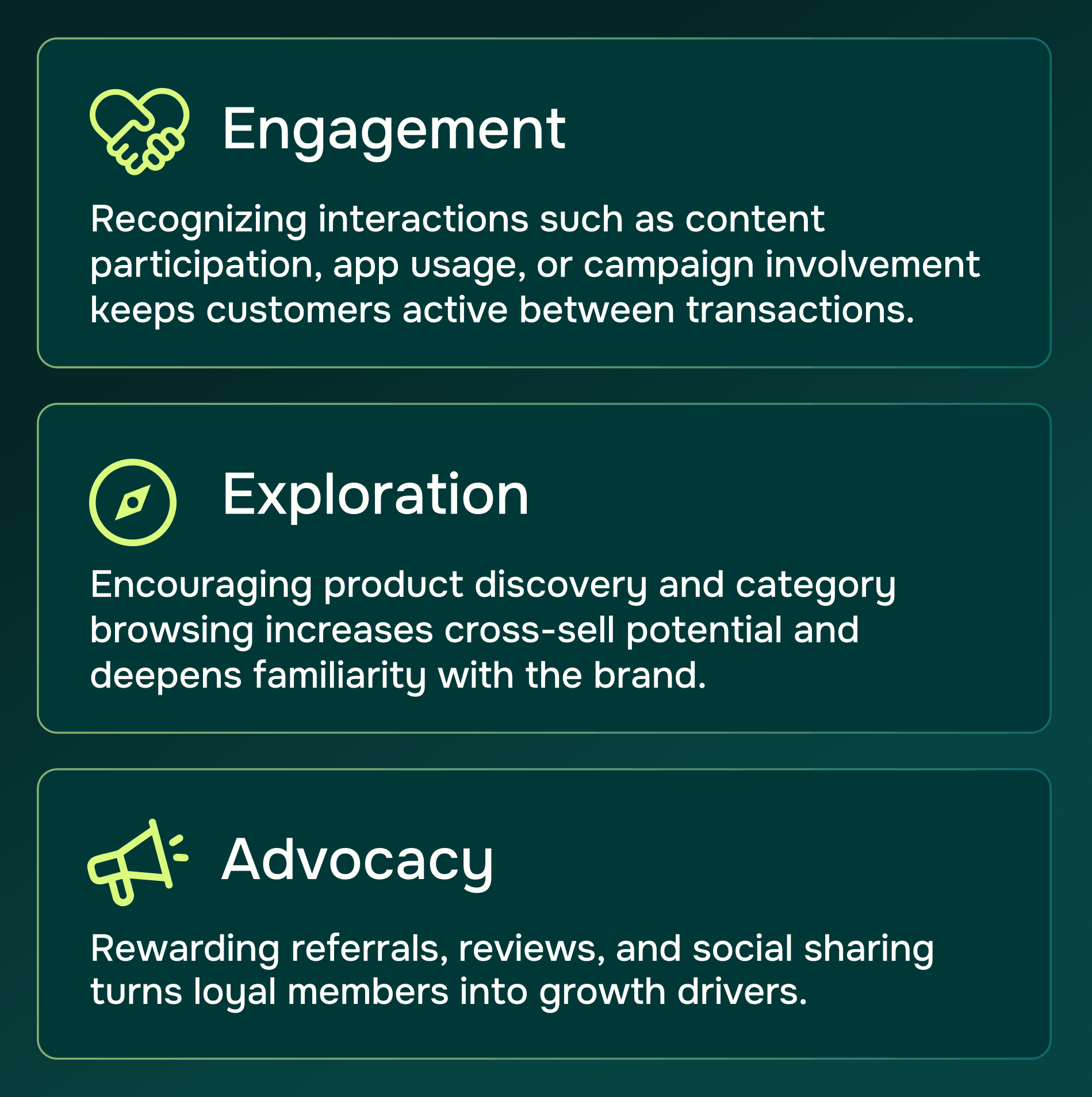
- Engagement: Recognizing interactions such as content participation, app usage, or campaign involvement keeps customers active between transactions.
- Exploration: Encouraging product discovery and category browsing increases cross-sell potential and deepens familiarity with the brand.
- Advocacy: Rewarding referrals, reviews, and social sharing turns loyal members into growth drivers.
Over time, programs that incentivize diverse behaviors build stronger habits, increase retention, and steadily compound lifetime value.
Customer Engagement as the Core of Modern Loyalty Programs
At the heart of every successful customer engagement loyalty program is one defining factor:.
Engagement is the engine of loyalty because it transforms members from passive recipients of rewards into involved participants in an ongoing experience. Traditional programs often rely on passive mechanics such as earning points, receiving emails, and redeeming rewards later, but passive loyalty fades quickly.
Active loyalty, by contrast, invites members to interact regularly through meaningful touchpoints. Games, challenges, progression systems, and visible milestones keep customers invested between purchases. These interactive elements create momentum, giving members reasons to return beyond transactional necessity.
When loyalty feels dynamic rather than dormant, customers build habits organically. Engaged customers don’t need to be reminded to come back, they want to.
Top Customer Engagement Tactics in Loyalty Programs
The most effective loyalty programs use structured engagement tactics that keep members active across the entire lifecycle, not just at the point of purchase.
- Gamified Onboarding: First impressions shape long-term participation. Interactive onboarding experiences introduce members to benefits, tiers, or missions in a playful, guided way, increasing early engagement and reducing drop-off after sign-up.
- Visible Progress Status: Progress-based rewards and status indicators tap into intrinsic motivation. When members can see advancement toward tiers, milestones, or achievements, they are more likely to continue participating.
- Challenges and Streaks: Time-based challenges and streaks encourage repeat behavior within defined periods. These mechanics turn frequency into habit by creating short-term goals with immediate feedback.
- Surprise Rewards: Surprise-and-delight mechanics introduce unexpected recognition. Timely, personalized rewards create emotional connections beyond predictable point accumulation.
- Seasonal Campaigns: Event-driven loyalty activations aligned with holidays, launches, or promotions re-energize the program and create natural peaks of engagement throughout the year.
Customer Loyalty Programs in Retail: What Works Today
Retail loyalty programs operate in one of the most competitive environments, where customers face constant choice overload and high price sensitivity. When alternatives are just a click away, discounts alone rarely build durable preference.
What works today is omnichannel loyalty that connects online and in-store experiences into one continuous journey. Customers expect to earn, engage, and redeem seamlessly across apps, websites, and physical locations without friction.
More importantly, modern retail loyalty links rewards to discovery, not just spending. Encouraging members to explore new categories, try featured products, or interact with branded content increases both relevance and basket size.
Interactivity plays a growing role here, particularly as retail media becomes more important. Gamified touchpoints and interactive placements capture attention more effectively than static ads, increasing engagement while simultaneously driving conversion.
In retail, loyalty succeeds when it enhances the shopping experience rather than interrupting it with another promotion.
Choosing the Right Customer Engagement Platform for Loyalty
As loyalty strategies grow more dynamic, tooling matters more than ever. A modern loyalty program customer engagement platform must do more than manage points, it needs to enable interaction, personalization, and continuous optimization at scale. The right infrastructure determines whether loyalty becomes a stagnant cost center or an adaptable growth driver.
When evaluating platforms, look for the following key capabilities.
- No-Code Creation: Marketing teams should be able to design and launch campaigns without relying heavily on development resources. Agility is critical for testing and iteration.
- Omnichannel Deployment: Loyalty experiences must function seamlessly across web, app, email, paid media, and in-store environments.
- Real-Time Analytics: Immediate performance visibility allows teams to optimize journeys based on live engagement data rather than static reports.
- Behavioral Triggers: Automated journeys triggered by actions, milestones, or inactivity ensure relevance at every stage of the customer lifecycle.
- Flexible Program Models: Support for both always-on journeys and campaign-based activations keeps loyalty fresh and adaptable.
Examples of Good vs. Great Customer Loyalty Programs
Not all loyalty initiatives are created equal. Many brands operate what could be considered good customer loyalty programs, but only a few build programs that truly influence long-term engagement and lifetime value. The difference lies in experience design.
“Good” Programs
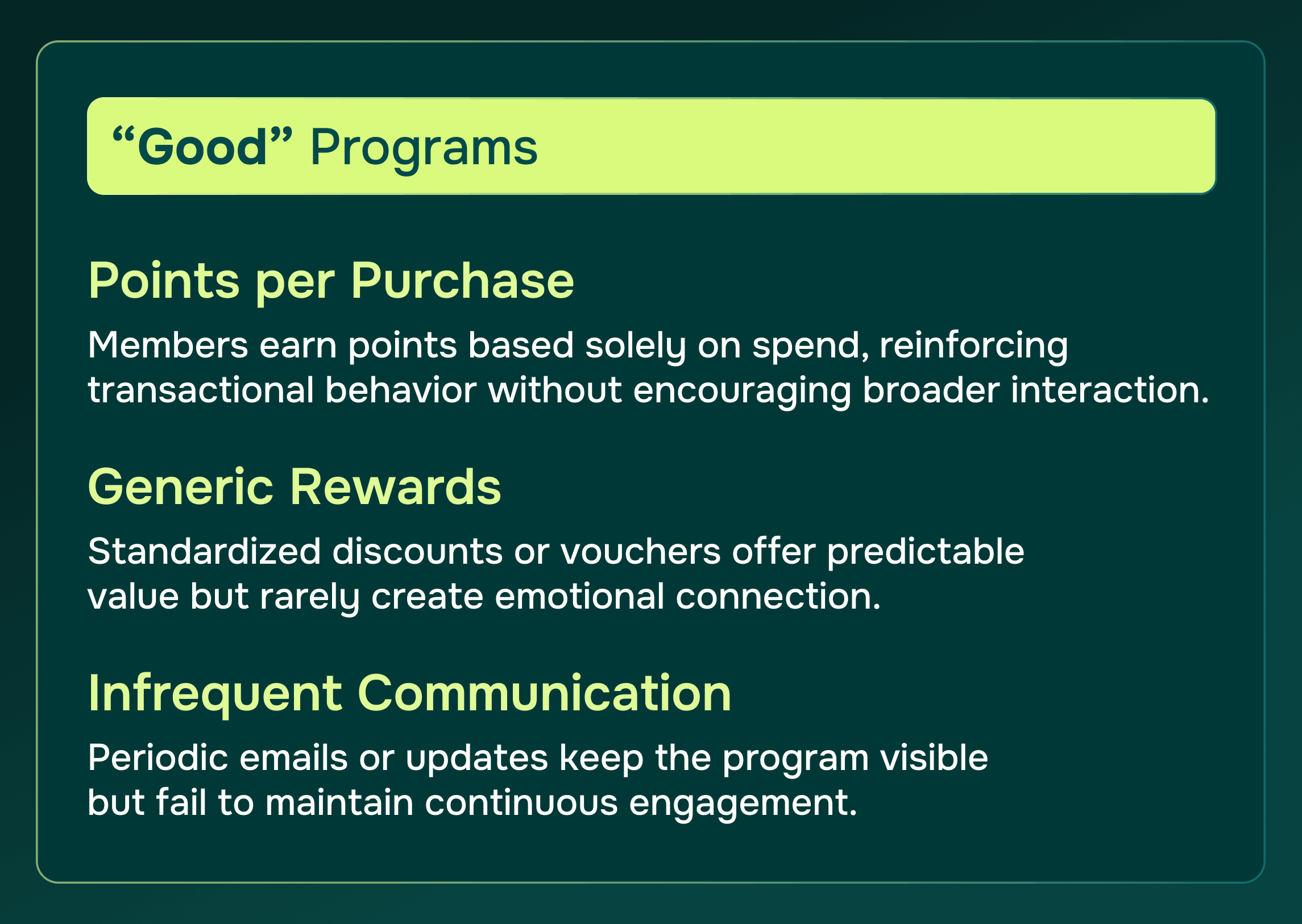
- Points per Purchase: Members earn points based solely on spend, reinforcing transactional behavior without encouraging broader interaction.
- Generic Rewards: Standardized discounts or vouchers offer predictable value but rarely create emotional connection.
- Infrequent Communication: Periodic emails or updates keep the program visible but fail to maintain continuous engagement.
“Great” Programs
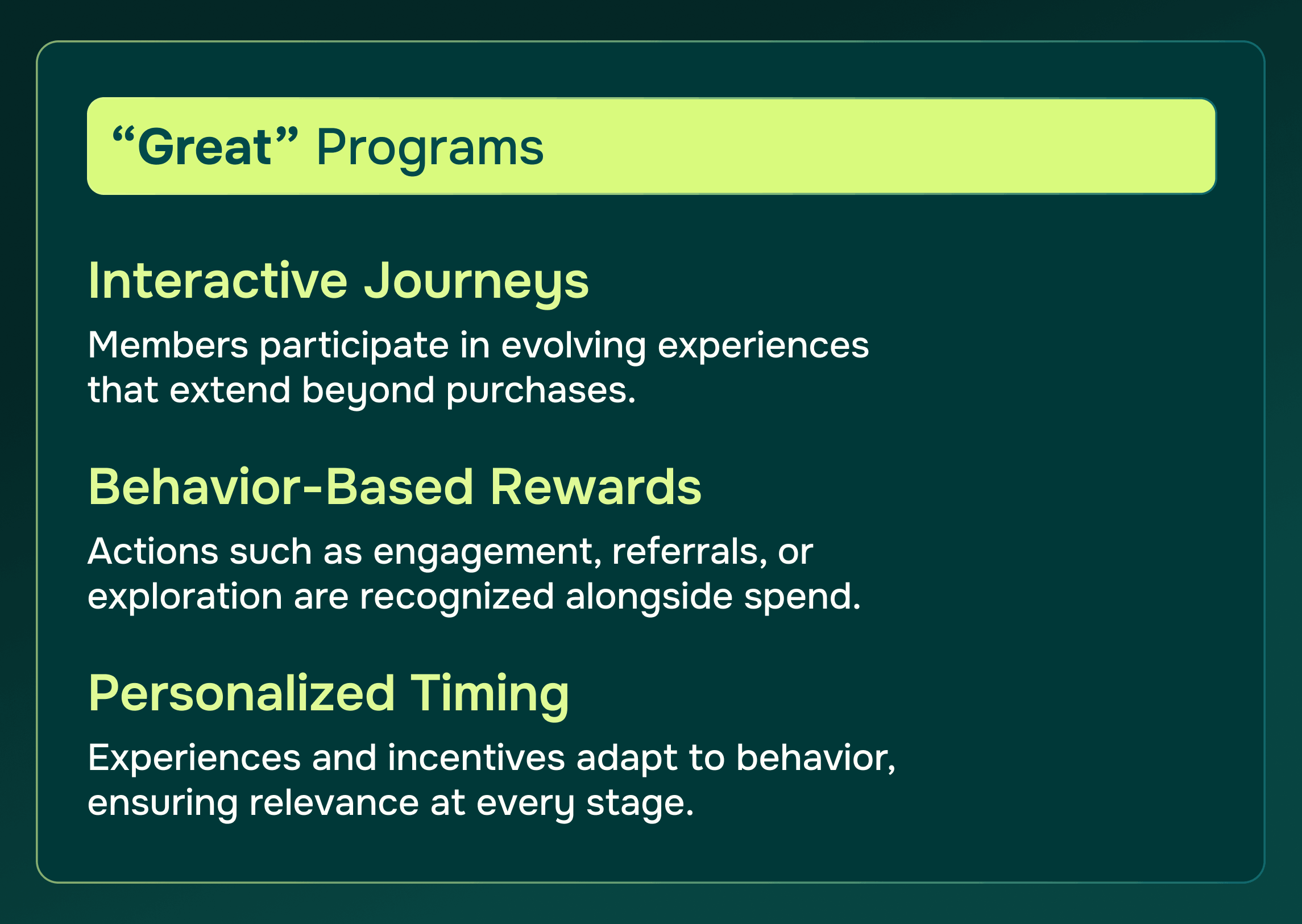
- Interactive Journeys: Members participate in evolving experiences that extend beyond purchases.
- Behavior-Based Rewards: Actions such as engagement, referrals, or exploration are recognized alongside spend.
- Personalized Timing: Experiences and incentives adapt to behavior, ensuring relevance at every stage.
Building Loyalty Programs Customers Actually Want to Engage With
The future of loyalty isn’t about offering more discounts or increasing reward value. It’s about engaging better. Customers are no longer impressed by complex point systems or generic incentives, they respond to experiences that feel interactive, personalized, and worth their time. The brands that win understand this shift. Instead of building schemes designed purely to drive transactions, they create dynamic environments where members participate, progress, and feel recognized.
Interactive, gamified loyalty is quickly becoming the new standard. By incorporating challenges, milestones, visible status, and behavior-based triggers, loyalty programs move from passive structures to active journeys. These experiences strengthen emotional connection while naturally increasing frequency and lifetime value.
Ultimately, loyalty grows when customers participate, not when they simply transact. When engagement becomes the foundation, retention and revenue follow.
If you’re ready to transform your loyalty strategy into an interactive growth engine, get in touch with BRAME to request a demo to see what’s possible.

Kunden mit einem Spielzug aktivieren, konvertieren und binden
Der Drag-and-Drop-Gamification Builder von BRAME ist der einfachste, schnellste und kosteneffektivste Weg, um gewöhnliches Einweg-Marketing in interaktive Markenerlebnisse zu verwandeln, die Kunden aktivieren, konvertieren und binden.
Name of the heading
Spiel auf Sieg mit BRAME.
Sprich mit einem Experten und fange an, Best Practices zu nutzen und branchenspezifische Gamification-Strategien mit unserem Builder umzusetzen.
Mehr Insights entdecken
Bist du bereit, tiefer in Gamification Marketing einzutauchen? Aktiviere, konvertiere und binde mehr Kunden mit unseren neuesten Erkenntnissen aus über 10.000 Kampagnen.

Was ist E-Commerce Gamification? Ein vollständiger Leitfaden
Es gibt ein ganzes Ökosystem von Waren, Dienstleistungen und Erlebnissen, die online verkauft oder gehandelt werden. Die Digitalisierung in all ihren Formen nimmt massiv zu und verändert die Art und Weise, wie die Menschen alltägliche Aktivitäten wie den Einkauf von Lebensmitteln oder das Bezahlen von Bussgeldern erledigen, enorm.

So setzt du Gamification in den sozialen Medien ein
Soziale Medien sind spannende digitale Plattformen, die Marken zur Verfügung stehen, um die Bekanntheit ihrer Produkte und Services massiv zu steigern. Unternehmen können soziale Medien nutzen, um eine Community von Fans aufzubauen und potenzielle Kunden zu erreichen. Zudem sind sie ein effektives Marketinginstrument für die Produktion von nutzergenerierten Inhalten (user generated content, UGC).

Wie Markenspiele dein Unternehmen wachsen lassen
Wusstest du, dass fast die Hälfte der Weltbevölkerung Videospiele spielt? Das bedeutet, dass mehr als einer von drei Kunden in ihrer Freizeit gerne Spiele spielt. Ganz zu schweigen davon, dass die jüngsten Entwicklungen in immersiven virtuellen Welten das alltägliche Leben immer mehr gamifizieren.
"Wir sind kosteneffizienter geworden und der Drag-and-Drop Builder ist einfach Hammer!"
Hör dir an, was Marc Marti von Tchibo und andere Marketer von internationalen Top-Brands über BRAME sagen.

Marc Marti


Elena Abeltshauser


Luca Cadlini

Das ist mehr als nur eine Werbeaktion – es ist der Beginn eines neuen, spielerischen Kundenerlebnisses. Wir freuen uns darauf, unterhaltsame und interaktive Möglichkeiten einzuführen, mit denen unsere Gäste die Marke erleben, Prämien sammeln und neue Gründe entdecken können, ihr District Taco in der Nachbarschaft zu besuchen.

This is more than a promotion — it’s the beginning of a new gamifiedcustomer experience. We’re excited to introduce fun, interactive ways for ourguests to engage with the brand, earn rewards, and discover new reasons tovisit their neighborhood District Taco.

Durch Gamification erreichen wir Kunden auf einer anderen Ebene und können sie überraschen, inspirieren und belohnen. Wir sehen einen Frequenz- und Umsatz-Uplift sowie eine Steigerung des Engagements der Nutzer unserer digitalen Kanäle.

Ich kann das Gamification-Marketing-Tool von BRAME wirklich allen weiterempfehlen, die kosteneffizient und einfach ein Tool benötigen, um E-Mail-Adressen zu sammeln oder den Umsatz zu steigern.

Die Echtzeit-Performance-Analysen sind für uns sehr wichtig, da wir sie nutzen können, um unsere Lehren daraus zu ziehen und unsere Strategie für kommende Kampagnen zu verfeinern.


In einem A/B-Test haben wir der Hälfte der Website-Besucher ein Gamification-Banner angezeigt, während die andere Hälfte keinen sah. Die Gruppe mit dem Gamification-Banner erzielte eine um 18 % höhere Sales-Conversion im Vergleich zur Gruppe ohne Gamification-Banner. Das war für uns ein hervorragendes Ergebnis, da es nur wenige Tools oder Mechanismen gibt, die die Sales-Conversion um 18 % steigern können.

With BRAME’s user-friendly software, we have been able to successfully implement a variety of campaigns and now see Gamification Marketing as a key component in our marketing mix.
An der Zusammenarbeit mit BRAME schätze ich besonders das Gamification-Marketing-Tool, das uns den Einsatz von Gamification-Marketing erleichtert, sowie die fundierte Beratung mit branchenspezifischen Best Practices. Dadurch konnten wir eine erfolgreiche Gamification-Kampagne starten und Spielmechaniken implementieren, die perfekt auf unsere Branche und Ziele zugeschnitten sind.

Alle Spiele haben bisher gut funktioniert, der Adventskalender ist ein jährliches Highlight, und die Kunden freuen sich schon darauf... Die Kosten sind viel geringer als bei Agenturen, die MPREIS zuvor für die Erstellung eines gamifizierten Adventskalenders eingesetzt hat.

In den letzten 20 Monaten haben wir über 35.000 Unique Leads gesammelt und eine Double-Opt-In-Rate von über 70 % erreicht, was mehr als doppelt so hoch wie der Branchendurchschnitt ist.
Wir haben schon vorher mit Agenturen im Gamification-Bereich gearbeitet, aber jetzt mit BRAME sind wir einfach viel flexibler geworden. […] Wir brauchen viel weniger Zeit, um Kampagnen aufzubauen, haben einen super Support, auf den wir zählen können, und sind mega schnell in der Umsetzung.
Die Drag-and-Drop-Funktionalität ermöglicht eine schnelle Erstellung von Spielen ohne technisches Fachwissen, was besonders wertvoll im Arbeitsalltag und zur Zeitersparnis ist.
Die vielfältige Auswahl an Spieltypen und die vollständig anpassbaren Templates, die das BRAME-Tool bietet, ermöglichen es uns, jedes Mal neue Erlebnisse zu schaffen.
Benutzer wurden durch gamifizierte Marketingkampagnen motiviert, wiederholt an Spielen teilzunehmen, was das digitale Engagement erhöhte und zu häufigeren Käufen führte.

Durch unsere gamifizierten Kampagnen mit BRAME konnten wir zahlreiche neue App-Downloads generieren und neue SPAR Friends Mitglieder in unserer Community begrüßen. Brame hat bei uns einen bleibenden Eindruck hinterlassen und wir freuen uns auf verschiedene weitere Kampagnen.

Während der Europameisterschaft erhöhte die Hit-the-Target-Gamification-Marketing-Mechanik die Verkaufskonversionen zwischen Juni und Juli im Vergleich zu Januar bis Mai 2024 um 44%. Zusätzlich wuchs die durchschnittliche Warenkorbgröße um 11% und die Transaktionen stiegen im gleichen Zeitraum um 21%.

Im Vergleich zu bisherigen Drittanbietern bietet uns BRAME ein flexibleres Tool und die Möglichkeit, Kampagnen zu deutlich geringeren Kosten eigenständig zu erstellen.

Durch eine Social-Media-Kampagne mit gamifiziertem Content konnten wir 14.000 Leads generieren, von denen sich 25 % über Double-Opt-In für unseren Newsletter angemeldet haben. Wir waren erstaunt, wie einfach es war, mit Gamification-Marketing innerhalb von nur vier Wochen qualitativ hochwertige Leads zu generieren. Einfach perfekt!

Don’t play around. Play to win.
Speak to an expert and start leveraging best practices and winning industry-specific Gamification strategies with our Builder.
- Flexible Preise
- Wirksame Resultate
- Einfache Nutzung
.avif)


