
How QSR Marketing Strategies Can Overcome Banner Blindness

Capturing customer attention has become one of the biggest challenges in modern QSR marketing. Consumers are constantly exposed to advertising across websites, mobile apps, social media, email, and streaming platforms, making it harder than ever for any single message to stand out.
In fact, a 2026 Gartner survey found that 81% of consumers actively try to ignore or avoid advertising, highlighting a growing resistance to traditional marketing messages. As banner blindness continues to reduce the effectiveness of display ads, app banners, and promotions, brands need to rethink how they engage their audiences.
This article explores why banner blindness occurs and how a more interactive QSR marketing strategy can inspire meaningful customer engagement instead of simply competing for attention.
What Is Banner Blindness?
Banner blindness is the tendency for consumers to consciously or subconsciously ignore advertising elements that resemble promotional content, even when those messages are relevant to them.
While some people actively skip or dismiss ads they recognize, much of banner ad blindness happens automatically as the brain learns to filter out familiar visual patterns in order to focus on what it considers more important. Over time, repeated exposure to similar advertisements can also contribute to ad fatigue and banner blindness, making campaigns progressively less effective.
This form of ad blindness affects both desktop and mobile experiences, where display ads, in-app banners, promotional notifications, and repetitive marketing messages often blend into the background instead of capturing meaningful attention.
Why Banner Blindness Is a Growing Challenge for QSR Marketing
QSR brands rely heavily on digital communication to drive traffic, encourage repeat purchases, and build customer loyalty. However, as quick service restaurant marketing becomes increasingly digital, customers are exposed to a constant stream of promotional messages across multiple touchpoints. The more frequently brands interrupt consumers with offers, the easier those messages become to overlook, reinforcing banner blindness and reducing campaign effectiveness.
Common marketing channels affected include:
- App notifications
- Loyalty offers
- Digital coupons
- Email marketing
- Social media advertising
This presents a growing challenge as current quick service restaurant trends continue to accelerate digital engagement through mobile-first ordering, personalized offers, and digital loyalty programs. While these technologies create more opportunities to connect with customers, they also increase the volume of marketing competing for attention.
The result is rising customer acquisition costs, lower campaign ROI, and greater difficulty retaining customers, leaving many brands spending more simply to achieve the same outcomes they once did.
Why Traditional QSR Marketing Strategies Are Losing Their Impact
The challenge extends beyond the ads themselves to the way many QSR marketing strategies are designed.
Traditionally, brands have relied on a straightforward formula:
- Message: a promotion is delivered
- Incentive: a discount or reward is offered
- Transaction: a purchase is encouraged and made by the customer
While this approach can generate short-term results, it creates a largely passive customer experience where communication flows in one direction (from the brand to the consumer). Over time, customers begin to expect discounts rather than value the relationship, making loyalty increasingly transactional instead of emotional.
Simply sending more messages or larger offers rarely solves the problem; in many cases, it contributes to it. Lasting engagement is built when customers actively participate in the experience, not when they are repeatedly asked to respond to another promotion.
The Shift from Capturing Attention to Activating Customer Behavior
Overcoming banner blindness requires more than improving creative or increasing media spend. It requires changing how customers experience marketing.
Instead of asking consumers to simply view another promotion, brands should encourage them to actively participate. Research in behavioral psychology shows that people are naturally motivated by experiences that provide a sense of involvement, progress, and accomplishment. This is why interactive experiences consistently generate higher levels of engagement than passive messaging alone.
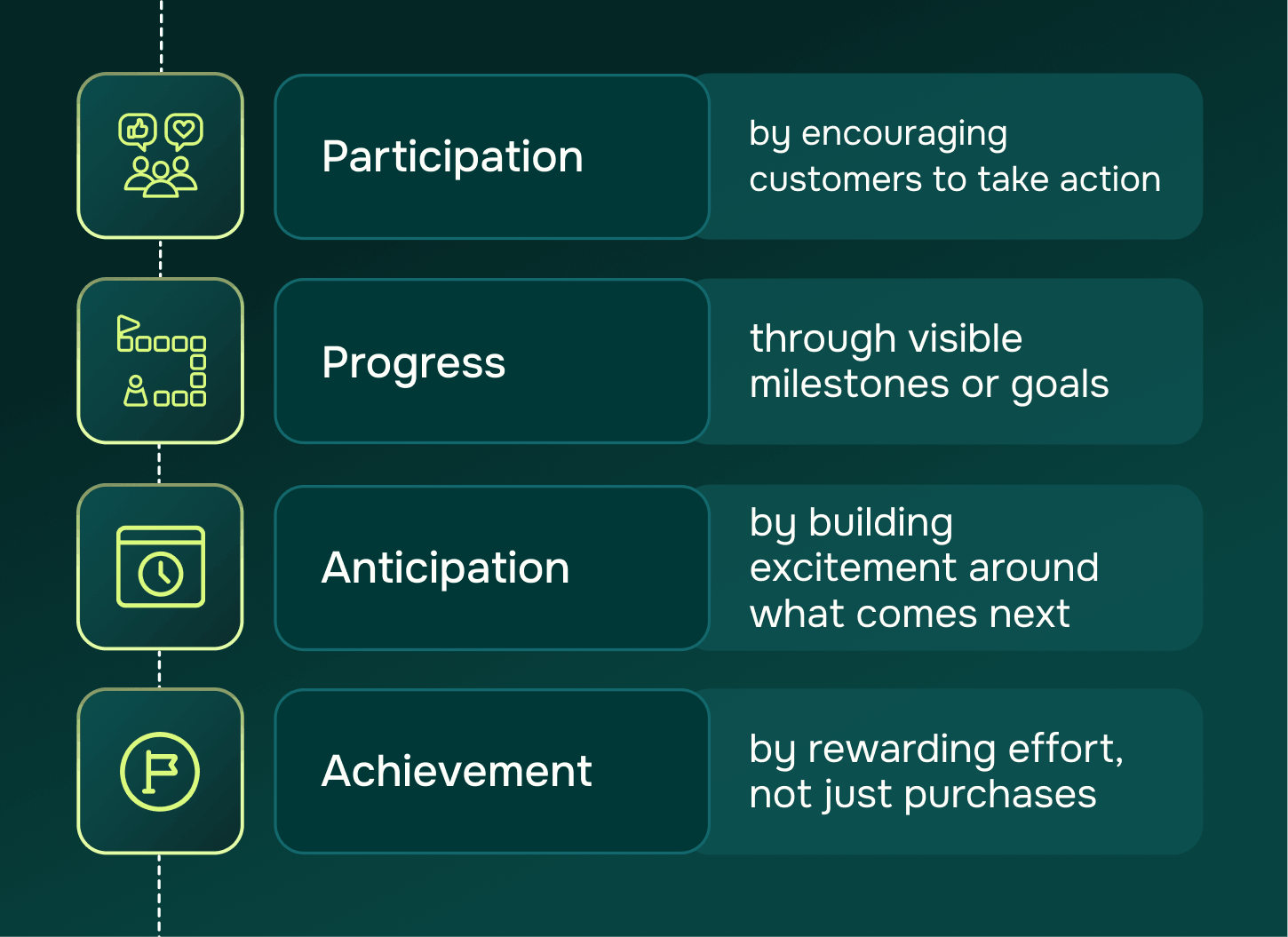
Rather than relying solely on offers, successful brands are designing experiences that foster:
- Participation by encouraging customers to take action.
- Progress through visible milestones or goals.
- Anticipation by building excitement around what comes next.
- Achievement by rewarding effort, not just purchases.
This reflects a shift from the traditional marketing model to one focused on action, progress, reinforcement, and habit formation. Each positive interaction reinforces the next, helping transform occasional purchases into lasting habits and true customer loyalty.
By activating customer behavior instead of simply broadcasting messages, QSR brands can create more meaningful engagement that keeps customers coming back.
How QSR Brands Can Create Engagement Ads to Get Around Banner Blindness
Overcoming banner blindness starts with designing experiences that give customers a reason to interact rather than simply scroll past another promotion. By shifting from passive messaging to active participation, QSR brands can create campaigns that capture attention, encourage repeat engagement, and build stronger customer relationships.
Here are several practical ways to create engagement ads that get around banner blindness.
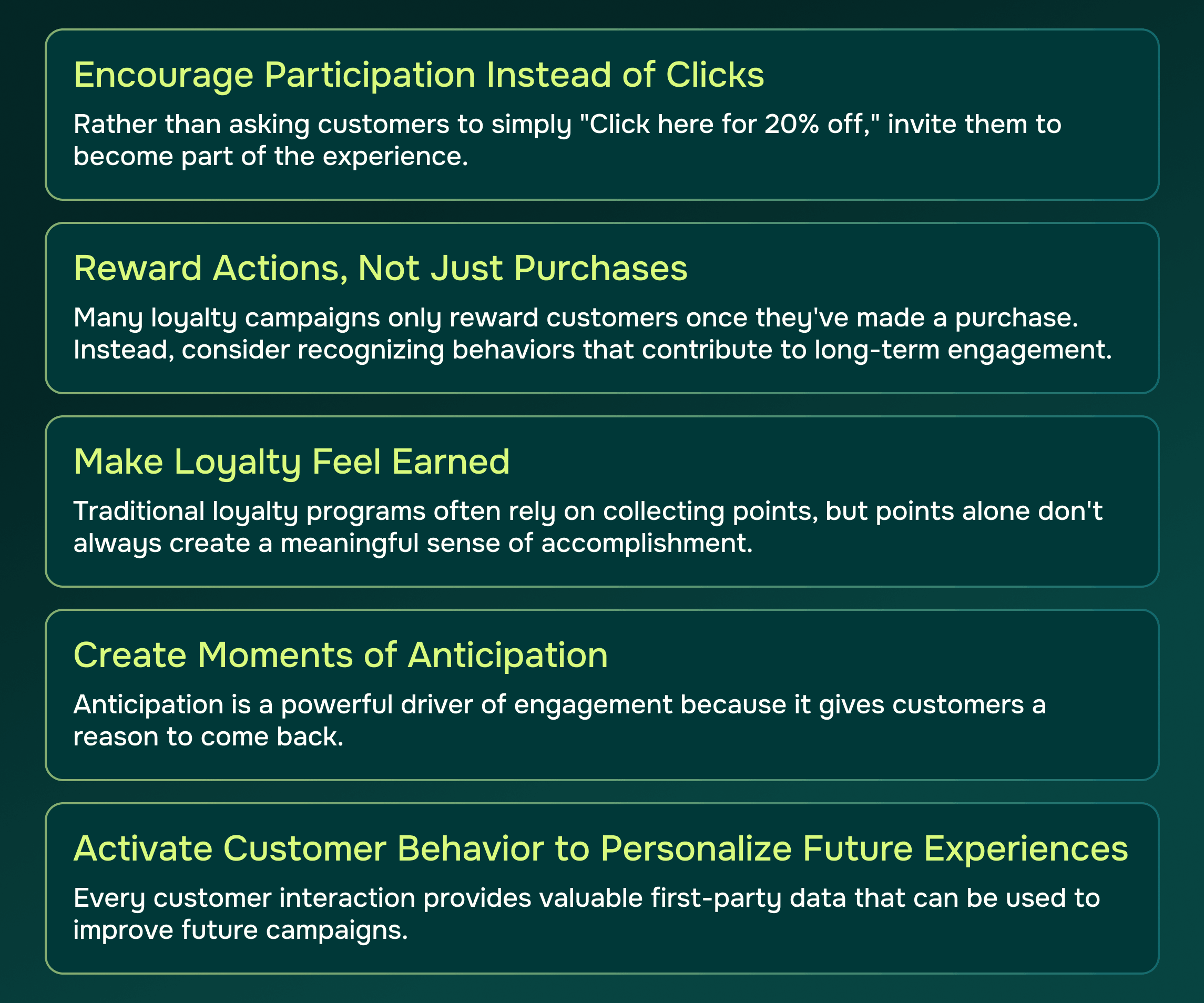
Encourage Participation Instead of Clicks
Rather than asking customers to simply "Click here for 20% off," invite them to become part of the experience. Interactive campaigns naturally encourage greater involvement because customers have something to do instead of something to ignore.
This could include completing a short challenge, unlocking a reward after reaching a milestone, filling a progress bar through repeat visits, or receiving an instant win after participating in a promotion.
These experiences create a sense of curiosity and achievement that is far more memorable than a static advertisement.
Reward Actions, Not Just Purchases
Many loyalty campaigns only reward customers once they've made a purchase. Instead, consider recognizing behaviors that contribute to long-term engagement.
For example, customers could earn rewards for visiting twice in one week, trying a new menu item, referring a friend, completing a seasonal challenge, or engaging with your mobile app.
Rewarding these smaller actions reinforces positive behaviors that can eventually lead to more frequent purchases while making the customer journey feel more engaging and dynamic.
Make Loyalty Feel Earned
Traditional loyalty programs often rely on collecting points, but points alone don't always create a meaningful sense of accomplishment. Customers are more likely to stay engaged when they can clearly see their progress toward a goal.
Visual milestones, achievement levels, collectible badges, or tiered rewards help transform loyalty from a passive points balance into an active journey.
When customers feel they are working toward something tangible, they have a stronger incentive to return and continue participating.
Create Moments of Anticipation
Anticipation is a powerful driver of engagement because it gives customers a reason to come back. Rather than offering the same predictable discount every week, introduce experiences that build excitement and curiosity. Mystery rewards, daily reveals, spin-to-win mechanics, digital scratch cards, and surprise milestone bonuses all create moments that customers look forward to.
These interactions make the experience itself rewarding, helping brands build emotional engagement instead of relying solely on price-based incentives.
Activate Customer Behavior to Personalize Future Experiences
Every customer interaction provides valuable first-party data that can be used to improve future campaigns. Rather than repeatedly sending generic offers, brands can utilize customer behavior data to deliver more relevant challenges, rewards, and recommendations based on individual preferences and past actions. This creates a more personalized experience while encouraging continued participation.
As customers interact more frequently, brands gain deeper behavioral insights, allowing them to deliver increasingly meaningful experiences that strengthen loyalty over time.
The Future of Quick Service Restaurant Marketing
As consumer expectations continue to evolve, the future of quick service restaurant marketing will depend less on who can deliver the most messages and more on who can create the most meaningful interactions.
Traditional interruption-based advertising is already becoming less effective as customers grow accustomed to filtering out promotional content, making banner blindness an increasingly persistent challenge. In response, leading brands are shifting their focus from capturing attention to earning participation.
Interactive customer experiences, personalized journeys, and behavior-driven engagement are becoming powerful competitive differentiators in an increasingly crowded market. Rather than measuring success solely through impressions, clicks, or short-term conversions, forward-thinking QSR marketing strategies will increasingly be judged by sustained customer participation, repeat behaviors, and long-term loyalty.
Brands that encourage customers to actively engage, make progress, and return frequently will be better positioned to build lasting relationships and maximize the value of every interaction.
In an environment where attention is limited, creating experiences worth participating in will become one of the most effective ways to drive sustainable growth.
Therefore, overcoming banner blindness requires understanding what motivates people to take action. At BRAME, we help brands transform passive audiences into active participants by designing customer experiences that encourage engagement, reinforce positive behaviors, and build lasting loyalty.
If you're looking to create more meaningful customer interactions and stronger long-term customer relationships, we'd love to show you what's possible.

Make your play to `engage, convert and retain today`
Speak to an expert and start leveraging best practices and winning industry-specific Gamification strategies with our Builder.
Name of the heading
`Make your play` to engage, convert and retain today
Speak to an expert and start leveraging best practices and winning industry-specific Gamification strategies with our Builder.
Discover More Insights
Ready to dive deeper into Gamification Marketing? Engage, convert and retain more customers with our latest learnings, proven over 10,000+ campaigns.

How to Increase Customer Retention in Marketplaces: Strategies That Actually Work
Marketplaces are built to scale, but that scale often comes at a cost. In the current market place acquisition costs are rising, conversation rates are decreasing, budgets are shrinking and loyalty remains fragile. In marketplaces, retention isn’t just a performance metric, it’s a growth multiplier.

E-commerce competition is heating up—here’s how to increase online sales to stay competitive
In the ever-evolving world of e-commerce, brands are facing down a new threat from an old enemy, and it's messing with your favourite metrics. People appreciate being bombarded with marketing that misses the mark less than ever—businesses even sell ad free experiences as features and build their pricing around it. Where does that leave marketers?

What Is Ecommerce Gamification? A Complete Guide
There is an entire business ecosystem of goods, services, and experiences sold or traded online. Digitization in all its forms is increasing and changing how people do everyday activities, such as buying groceries or paying fines.
"We became more cost-efficient and the drag and drop Builder is just awesome!"
See what Marc Marti from Tchibo and other leading marketers had to say about BRAME.

Marc Marti


Elena Abeltshauser


Luca Cadlini

This is more than a promotion — it’s the beginning of a new gamified customer experience. We’re excited to introduce fun, interactive ways for our guests to engage with the brand, earn rewards, and discover new reasons to visit their neighborhood District Taco.


Through Gamification, we reach customers on a different level and can surprise, inspire, and reward them. We are seeing an increase in frequency and revenue as well as enhanced engagement from users of our digital channels.

I can highly recommend BRAME's Gamification tool to anyone looking for a cost-effective and simple solution to collect email addresses or increase sales

The real-time performance analytics are very important to us, as they allow us to take our learnings and refine our strategy for upcoming campaigns.


In an A/B test, we displayed a Gamification banner to half of our website visitors, while the other half saw no banner. The group with the Gamification banner achieved an 18% higher sales conversion compared to the group without it. This was an outstanding result for us, as only very few tools or methods can boost sales conversion by 18%

With BRAME’s user-friendly software, we have been able to successfully implement a variety of campaigns and now see Gamification Marketing as a key component in our marketing mix.
What I appreciate most about working with BRAME is the drag-and-drop Gamification Builder, which made it easy for us to implement Gamification Marketing, along with the expert advice and support based on industry-specific best practices. This enabled us to launch a successful Gamification campaign and implement game mechanics perfectly suited to our industry and goals.

All the games have worked well so far. The Advent calendar is a yearly highlight, and customers are already anticipating it. The cost is much lower compared to the agencies MPREIS previously used to create a gamified Advent calendar.

In the last 20 months, we’ve collected over 35,000 unique leads and achieved a double opt-in rate of over 70%, which is more than double the industry average.
We had previously worked with agencies in the Gamification field, but with BRAME, we’ve become much more flexible. [...] We need much less time to set up campaigns, have excellent support that we can rely on, and are incredibly fast in execution.
The drag-and-drop functionality allows for quick game creation without technical expertise, which is especially valuable for day-to-day operations and to save time.
The diverse selection of game types and fully customizable templates provided by BRAME's tool allow us to create new experiences every time.
Users were motivated to repeatedly participate in games through gamified marketing campaigns, increasing the digital engagement and driving more frequent purchases.

Through our gamified campaigns with BRAME, we were able to generate numerous new app downloads and welcome new SPAR Friends members to our community. BRAME has made a lasting impression on us, and we are looking forward to various other campaigns.

During the European Championship, the Hit-the-Target Gamification Marketing mechanic increased sales conversions by 44% between June and July compared to January to May 2024. Additionally, the average card size grew by 11%, and transactions increased by 21% during the same period.

Compared to previous third-party providers, BRAME offers us a more flexible tool and the ability to independently create campaigns at a considerably lower cost.

Through a social media campaign with gamified content, we generated 14,000 leads, with 25% signing up for our newsletter via double opt-in. We were amazed at how easy it was to generate high-quality leads with Gamification Marketing in just four weeks. Simply perfect!

Don’t play around. Play to win.
Speak to an expert and start leveraging best practices and winning industry-specific Gamification strategies with our Builder.
- Flexible Pricing
- Impactful Results
- Easy to Use
.avif)


